
Planning a WISP Expansion in Colorado? The Pre-Build Checklist to Run Before You Commit Capital
Quick Answer: Before committing capital to a WISP expansion in Colorado, run a pre-build checklist covering the essentials: validate the market and coverage area, confirm line-of-sight and tower/site availability given the terrain, plan for capacity and backhaul, work through permitting and land/right-of-way access, assess the physical and regulatory site conditions, and build a realistic plan and budget grounded in all of the above. The point is to surface the challenges, especially Colorado's terrain and permitting, before you spend, so the expansion is validated and de-risked rather than discovered problem-by-problem after the money's committed.
Expanding a wireless ISP is exciting, more coverage, more subscribers, more revenue, but it's also a significant capital commitment, and Colorado's terrain and geography make wireless expansion particularly unforgiving of poor planning. The worst time to discover a fatal problem, no line of sight, no viable tower site, a permitting dead end, is after you've committed capital. The best insurance is a thorough pre-build check that surfaces those issues while you can still adjust.
A disciplined pre-build process validates the expansion before the money goes out: does the coverage work, are the sites viable, can you get the permits and access, will the capacity hold up, and does the plan and budget reflect reality? Running that checklist first is what separates a well-planned expansion from an expensive lesson. Here's the pre-build checklist to work through before you commit capital to a WISP expansion in Colorado.
Validate the Market and Coverage Area
Before anything technical, confirm the expansion makes sense where you're aiming it, that there's real demand and that you can actually cover the target area.
Start with the market: is there sufficient unserved or underserved demand in the target area to justify the expansion, and can you realistically reach and sign those subscribers? An expansion into an area without enough addressable demand, or where you can't effectively serve it, is a capital risk regardless of how well you build. Alongside demand, define the coverage area precisely, exactly where you intend to provide service, because that drives every downstream question about sites, line of sight, and capacity.
Getting clear on who you're serving and where is the foundation. It's easy to expand toward a general area without validating the specific coverage and demand, and that vagueness is where expansions go wrong. Pin down the market and the coverage footprint first, so the rest of the checklist is grounded in a real, defined target.
Confirm Line-of-Sight and Site Availability, the Terrain Question
For a WISP, this is the make-or-break item, especially in Colorado: can you actually get the wireless signal to your coverage area, given the terrain and available sites?
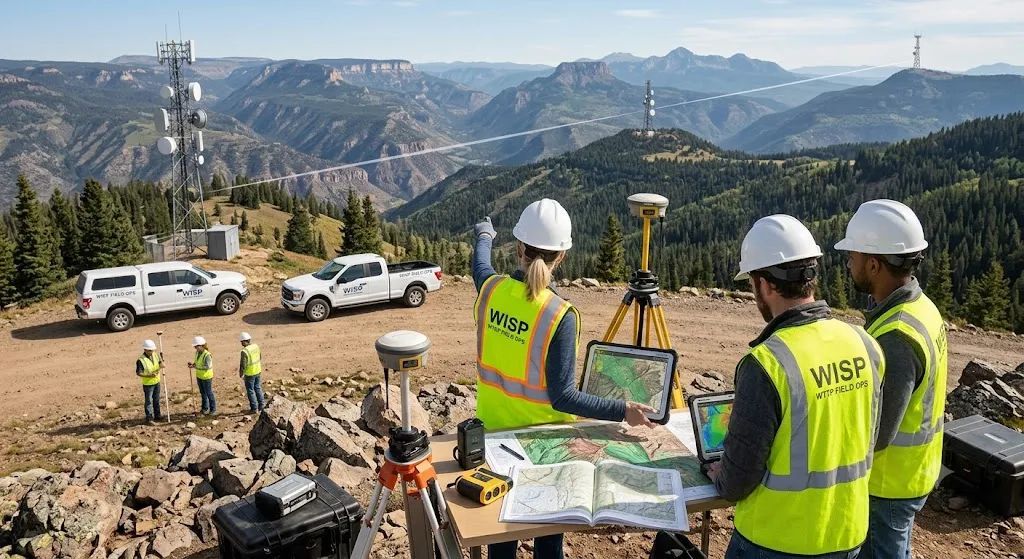
Fixed wireless depends on line of sight (or near line of sight) between towers/access points and subscribers, and Colorado's terrain, mountains, hills, canyons, tree cover, is exactly what blocks it. So a critical pre-build step is confirming that you have viable tower or antenna sites that can actually reach your intended coverage area with adequate signal, accounting for the terrain. That means assessing line of sight across the footprint and identifying the sites (towers, rooftops, high-vantage locations) needed to serve it.
You also have to confirm those sites are actually available, that you can secure access to the tower or site locations you need (leases, agreements, space on existing structures). A perfect site you can't get access to is no site. This terrain-and-site question is where Colorado WISP expansions most often hit reality: the coverage that looks good on a map may not work once the mountains and available sites are accounted for. Confirming line of sight and secured site availability before committing capital is essential, it's the physical feasibility of the whole expansion.
Plan Capacity, Backhaul, and Network Design
Beyond reaching the area, the expansion has to actually deliver adequate service, which means planning capacity, backhaul, and the network design up front.
Confirm that the expansion's design can carry the traffic you expect, that you have adequate backhaul to feed the new coverage (getting sufficient bandwidth to the towers/sites), and that the network is designed to deliver the performance subscribers will expect as they come online. An expansion that reaches the area but can't deliver adequate capacity or has a backhaul bottleneck will disappoint subscribers and undermine the investment. So the technical plan, capacity, backhaul, equipment, and design, needs to be worked out before building, not assumed.
This is where a solid network design and realistic capacity planning matter: they ensure the expansion will perform, not just exist. Planning the design and capacity up front also feeds the budget accurately. Confirming the expansion can carry its intended load, with the backhaul to support it, is a key pre-build box to check before capital goes out.
Tip: Treat line-of-sight and site availability as go/no-go gates, not details to sort out later. For a Colorado WISP, if you can't confirm viable, accessible sites that reach your coverage area given the terrain, the rest of the plan doesn't matter yet. Walk (or professionally assess) the actual sites and sightlines before committing, mapped coverage and real coverage can differ sharply in mountainous terrain. Surfacing a line-of-sight or site-access problem before you spend is a cheap save; discovering it after is an expensive one.
Work Through Permitting, Access, and Site Conditions
The regulatory and physical realities, permitting, land/right-of-way access, and site conditions, can make or break a build, and they need to be understood before you commit, not after.
Permitting
Towers, equipment, and construction typically require permits and approvals, and permitting can be complex, slow, or restrictive depending on the jurisdiction. Understanding what permits the expansion needs, and whether they're realistically obtainable in a workable timeframe, is essential, a permitting dead end or long delay can sink or stall an expansion.
Land and access
You need the rights to place equipment and run any needed infrastructure, tower site leases, land access, right-of-way for backhaul or fiber. Confirming you can secure the necessary land and access rights is a prerequisite to building.
Site conditions
The physical conditions at your sites, terrain, access for construction, power availability, and any environmental or structural considerations, affect feasibility and cost. Assessing these before building surfaces problems while they can still be planned for.
These factors are exactly where builds encounter costly surprises when they're not checked first. Working through permitting, access, and site conditions in the pre-build phase, ideally with people who know the local jurisdictions and terrain, is what keeps them from becoming expensive mid-build roadblocks. In Colorado, with its varied jurisdictions and challenging terrain, this due diligence is especially important.
Build a Realistic Plan and Budget on What You Found
Finally, everything above should feed into a realistic plan and budget, one grounded in the actual findings, before capital is committed.
Once you've validated the market and coverage, confirmed line of sight and sites, planned capacity and backhaul, and worked through permitting, access, and conditions, you can build a plan and budget that reflect the real project, its real scope, challenges, timeline, and costs, rather than optimistic assumptions. This is what makes the capital commitment an informed one: you're committing to a validated, de-risked expansion with a budget that accounts for what you've learned, not to a hopeful sketch.
That realistic, findings-based plan is the payoff of the whole checklist. It's also where experienced help is valuable: pulling together market, technical, permitting, and site realities into a sound plan and budget takes expertise, and getting it right is what protects the capital. Committing capital to an expansion that's been properly validated through this checklist is a fundamentally different, and safer, decision than committing to one that hasn't. Do the pre-build work, and you commit with confidence.
Warning: The costly WISP-expansion mistake is committing capital before confirming the make-or-break items, especially line-of-sight and site availability given Colorado's terrain, plus permitting and access. Coverage that looks fine on a map can fail against real mountains, and a site you can't get, or a permit you can't obtain, can stall or sink a build after the money's committed. Don't let optimism or momentum push you past the pre-build validation; surfacing these problems before you spend is far cheaper than discovering them after, when your options and capital are already limited.
Frequently Asked Questions
What should I check before committing capital to a WISP expansion?
Run a pre-build checklist: validate the market and define the coverage area, confirm line-of-sight and viable, accessible tower/antenna sites given the terrain, plan capacity and backhaul, work through permitting and land/right-of-way access, assess site conditions, and then build a realistic plan and budget grounded in those findings. The goal is to surface challenges before you spend, so you commit to a validated, de-risked expansion rather than discovering problems after the money's out.
Why is line-of-sight so critical for a Colorado WISP?
Because fixed wireless depends on line of sight (or near line of sight), and Colorado's terrain, mountains, hills, canyons, tree cover, is exactly what blocks it. Coverage that looks good on a map may not work once the terrain and available sites are accounted for. Confirming you have viable, accessible sites that actually reach your coverage area given the terrain is make-or-break, which is why it should be a go/no-go gate before committing capital.
What's the difference between a viable site and an available one?
A viable site can physically reach your coverage area with adequate signal given the terrain; an available site is one you can actually secure access to (via lease, agreement, or space on an existing structure). You need both, a perfect site you can't get access to is no site. Pre-build planning has to confirm not just that suitable sites exist, but that you can secure the ones you need.
Why plan capacity and backhaul before building?
Because reaching the coverage area isn't enough, the expansion has to deliver adequate service. If the design can't carry expected traffic, or there's a backhaul bottleneck feeding the new sites, subscribers will be disappointed and the investment undermined. Planning capacity, backhaul, and network design up front ensures the expansion will actually perform, and it feeds the budget accurately, so it's an essential pre-build step, not an afterthought.
How much does permitting matter in the pre-build phase?
A great deal. Towers, equipment, and construction typically need permits, and permitting can be complex, slow, or restrictive by jurisdiction, a dead end or long delay can stall or sink an expansion. Understanding what permits you need and whether they're realistically obtainable in a workable timeframe, before committing capital, keeps permitting from becoming an expensive mid-build roadblock. In Colorado's varied jurisdictions, this is especially important to check early.
Can't I just start building and solve problems as they come up?
That's the expensive path. The make-or-break issues, line of sight, site access, permitting, capacity, are far cheaper to surface and address before capital is committed than after. Discovering a fatal problem mid-build, when your money and options are already limited, is how expansions turn into costly lessons. The pre-build checklist exists precisely to find those problems while you can still adjust the plan or decide not to proceed.
Why involve experienced help in pre-build planning?
Because pulling together market, technical (line-of-sight, capacity, backhaul), permitting, access, and site realities into a sound, validated plan and budget takes expertise, and getting it right is what protects the capital. Experienced help, especially people who know Colorado's terrain and local jurisdictions, can assess feasibility, anticipate the challenges, and produce a realistic plan, so you commit capital to a properly de-risked expansion rather than a hopeful one.
Validate Before You Commit
A WISP expansion in Colorado lives or dies on the homework you do before committing capital. Run the pre-build checklist, validate the market and coverage, confirm line-of-sight and secured, viable sites against the terrain, plan capacity and backhaul, work through permitting, access, and site conditions, and build a realistic plan and budget on what you find. The point is to surface the make-or-break challenges, especially Colorado's terrain and permitting, while you can still adjust, rather than discovering them after the money's out. Do the pre-build work, ideally with experienced local help, and you commit capital to a validated, de-risked expansion instead of an expensive gamble.
De-risk your WISP expansion before the capital goes out — In Colorado, terrain, line-of-sight, site access, and permitting can determine whether a network expansion succeeds or struggles. Identifying these challenges before investing helps avoid costly delays and unexpected expenses. With 20
years of experience, TrueLight Construction LLC
provides expert
WISP network planning
services in Colorado Springs, Colorado, helping providers evaluate coverage, capacity, site conditions, permitting, and infrastructure needs before construction begins. Reach out today to review your pre-build checklist and move forward with a realistic, well-planned expansion.