
From Feasibility Study to Lit Network: How a Broadband Project Actually Moves Forward in Colorado
You have a neighborhood, a new development, or a stretch of county road where the internet barely works, and the calls keep coming. People want real fiber, and you are the one who has to figure out how to get it there. So you open a map, look at the poles and the pavement, and realize you have no clear idea what the first move actually is.
Here is the short version. A broadband build is not a single project. It is a chain of stages, and each one feeds the next. The feasibility study at the very front quietly decides how smooth or painful everything after it will be. Get that part right, and the design, the permits, the digging, and the final turn up tend to fall into place. Rush it, and you pay for it at every later step. After running fiber across rocky ground and tight rights of way for years, we can tell you exactly where a project runs fast and where it stalls.
Where a Broadband Project Really Starts
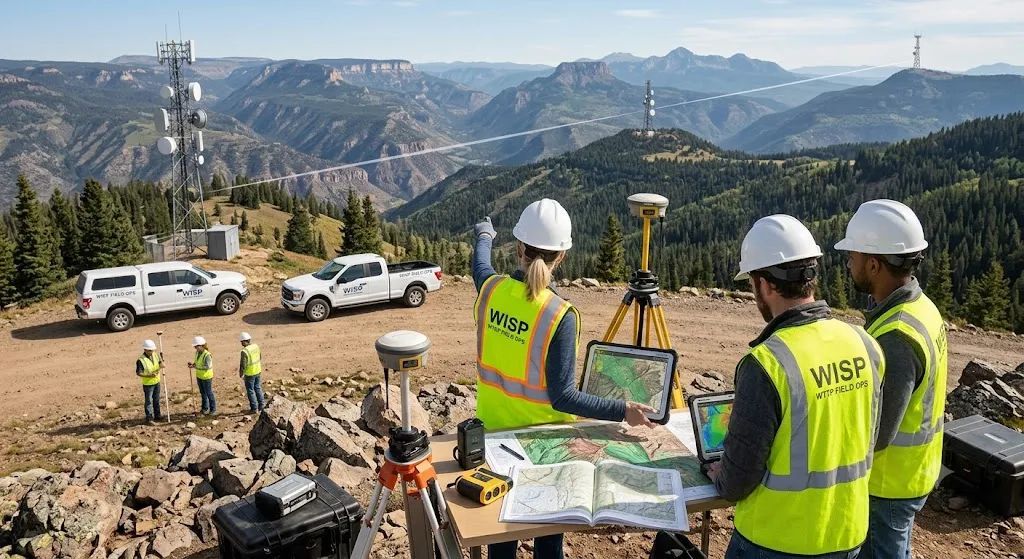
A broadband build lives or dies on the feasibility study, not on construction day. Before anyone touches the ground, you need to know what is actually buildable across your service area. That means walking the route, checking which poles can carry more weight, finding where conduit already exists, and spotting the places where solid rock sits a few inches below the surface. Around Colorado Springs, that last one matters more than people expect, because decomposed granite and buried boulders can turn a simple trench into a slow grind. A good study gives you the realistic path, the rough length of cable, and the obstacles that will eat your schedule before catching you off guard.
Turning the Study Into a Buildable Design
Once the route is confirmed, the design phase translates it into something we can actually construct. This is where the network gets drawn down to the strand: how many fibers run on each segment, where the splice points land, where the main cabinets and handholes go, and how every home or building taps in later. We map underground runs against aerial runs, because the right of way, the pole owners, and the terrain decide which method wins on each block. A clean design also sets the loss budget, the limit of signal loss the network can absorb end to end. Skip the detail here and you find the gaps at testing, when fixing them is far harder.
Clearing the Path Before Anyone Digs
Permitting and make ready is the stage that quietly controls your timeline. Before construction, you need approvals from the city or county for the route, plus coordination with every utility already sharing the corridor. If the plan uses existing poles, make ready work often comes first, moving or adjusting other lines so the new fiber has safe space. Then come the locates, where crews mark every buried gas, water, power, and communication line so the dig avoids them. In a fast growing area like El Paso County, corridors fill up quickly, and missing one buried line can shut a job down for days. We push this stage early, because waiting on approvals is the most common reason a build slips.
Putting Fiber in the Ground and on the Poles
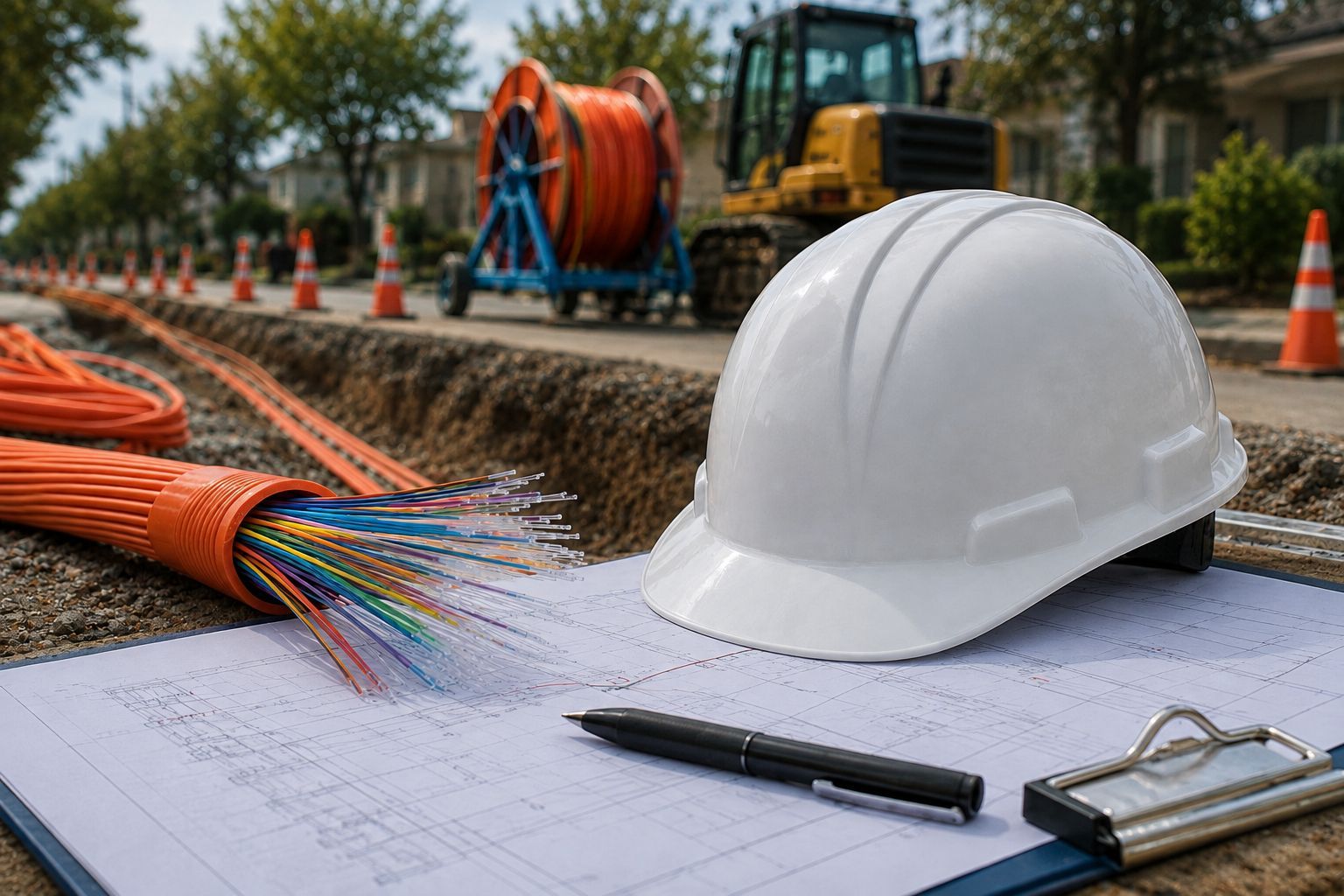
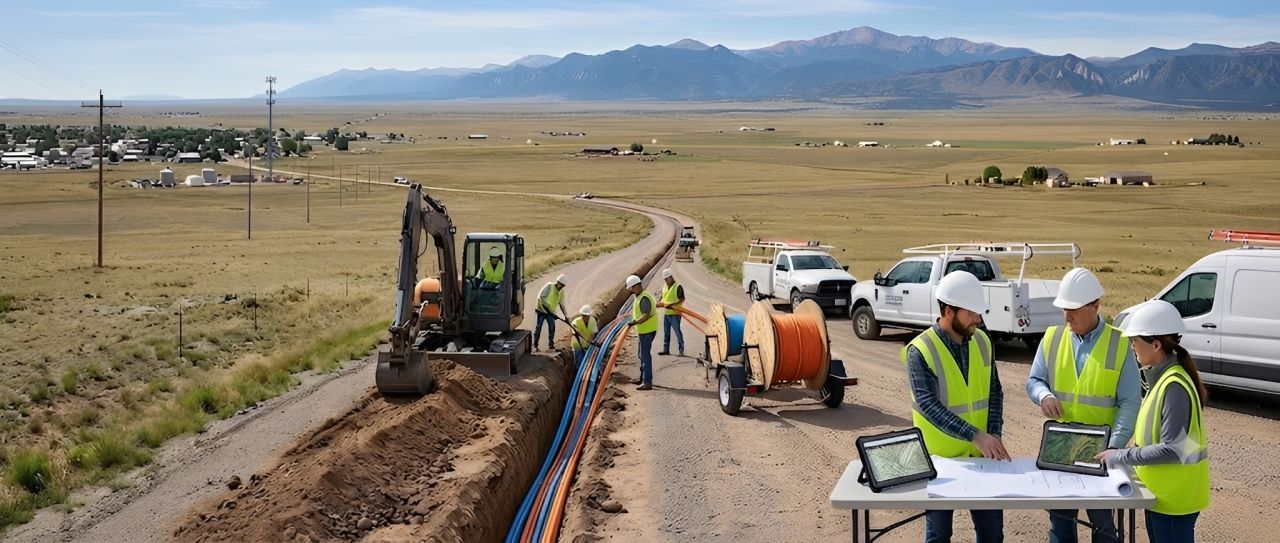
Construction is the visible part, and it splits into two methods. Underground placement uses directional boring, trenching, or plowing to lay conduit, then pulls or jets the fiber through it. Burial depth usually runs around 24 to 36 inches so the line sits below frost and below the reach of routine landscaping. Aerial placement lashes the cable to existing poles, which moves faster but depends on pole space and weather. Along the Front Range, wind and sudden temperature swings shape how and when we string aerial cable. Vaults, handholes, and pedestals go in at the planned splice points, giving us clean access later without tearing up finished ground.
Splicing, Testing, and Proving the Network
Splicing and testing is where a pile of cable becomes a working network. Fusion splicing fuses the glass fibers together at the cabinets and handholes, and each joint has to hold signal loss to a tight threshold, often well under a tenth of a decibel. After the splices, we test every strand with an OTDR, which sends light down the fiber and reads back the exact location of any loss or break. This step catches the bad connector or the pinched cable before a customer ever notices. We document every reading as a record of the finished build, so any future repair starts with a map instead of a guess.
Lighting It Up
Lighting the network is the final stage, and it is faster than people expect once the glass is clean. The electronics at each end power on, the fibers carry signal for the first time, and the route shifts from dark fiber to a live, lit network. We verify speeds end to end, confirm each segment meets its loss budget, and hand over a system that is ready for service. The build that took months of planning and digging comes alive in a matter of hours, because every earlier stage was done right.
What Colorado Terrain Does to Your Timeline
Local ground conditions change a broadband build more than any spec sheet. Around Colorado Springs and across El Paso County, shallow bedrock and decomposed granite slow underground work and sometimes force a reroute or a switch to aerial. The freeze thaw cycle at this altitude works on shallow lines year after year, which is why we bury below frost and bed the conduit carefully. Short construction windows are real too, since snow, spring runoff, and summer storms can each pause a dig. Expansive soils in some pockets shift over time and stress poorly bedded conduit. Plan for the rock and the weather up front and the schedule holds. Ignore them, and the ground sets the pace for you.
Where Projects Stall, and How to Avoid It
Most broadband projects do not fail in construction. Most stall earlier, for reasons easy to fix once you see them coming. Starting design before the feasibility study is solid means redrawing the whole route when a single corridor turns out blocked. Filing for permits late leaves crews idle while approvals catch up. Skipping thorough locates risks a strike on a buried line, which stops everything and creates real safety hazards. Underbuilding the strand count on the first pass forces a far larger second build when demand grows, and demand always grows here. Each of these is understandable under deadline pressure, yet each one adds far more delay than the shortcut ever saved.
Frequently Asked Questions
How long does it take to go from feasibility study to a lit network?
It depends on route length, permitting, and terrain. A focused build can move from study to live service in a few months, while larger routes stretch longer once locates and approvals stack up. Rocky ground and busy corridors add time too. We give you a realistic window early so the schedule holds across every stage.
Is underground or aerial fiber the better choice?
Neither wins everywhere. Underground fiber resists wind, weather, and damage but moves slower through rock, which matters across Colorado Springs. Aerial fiber installs faster where pole space allows. We choose per segment, matching the method to terrain, the right of way, and the long-term reliability you need, rather than forcing a single approach everywhere.
Why does the feasibility study matter so much?
Because it sets every later stage. The study confirms the buildable route, flags rock and blocked corridors, and sizes the cable before anyone digs. A solid study keeps design, permitting, and construction on track, while a rushed one shows up as real delays at every step that follows. We treat it as the true foundation.
What slows fiber construction around Colorado Springs?
Shallow bedrock and decomposed granite slow trenching and sometimes force a reroute. Altitude freeze thaw cycles, spring runoff, and summer storms shrink the working window. Busy corridors in El Paso County add coordination time. We plan the route around these conditions from day one, so the rock and the weather shape the schedule far less.
Can existing conduit or poles be reused?
Often, yes, and reuse speeds the whole build. Empty conduit lets us pull new fiber without trenching, and sound poles can carry aerial cable after make ready. We check capacity and condition during the study, since reuse only helps when the existing path truly has room. Where it fits, you save weeks of underground work.
Reliable Broadband Construction From Study to Live Service
Every successful broadband build comes back to one principle: the work you do before construction decides how the construction goes. In Colorado, where rock, altitude, and short weather windows punish shortcuts, that early planning matters even more than it does in flatter, milder regions. TrueLight Construction LLC has spent 20 years turning feasibility studies into lit fiber networks across Colorado Springs, Colorado and the surrounding communities. If you are planning a broadband route through this terrain and want it engineered, permitted, and built to last, reach out to us and let us map the path from study to live service.