
Connecting a Rural Colorado Community: When to Bring In a Consultant (and What They Own)
Quick Answer: For a rural Colorado broadband project, it's worth bringing in a consultant when the effort is large or first-of-its-kind, grant-funded, on a tight timeline, facing tough terrain and permitting, or run by a team without the capacity or experience, which describes most rural community builds. What a consultant owns varies by engagement but typically includes planning and feasibility, construction management, coordination and oversight, budget and schedule control, grant compliance, and being the experienced hand that keeps the project on track. They own the pieces that most need experience, de-risking a high-stakes community build.
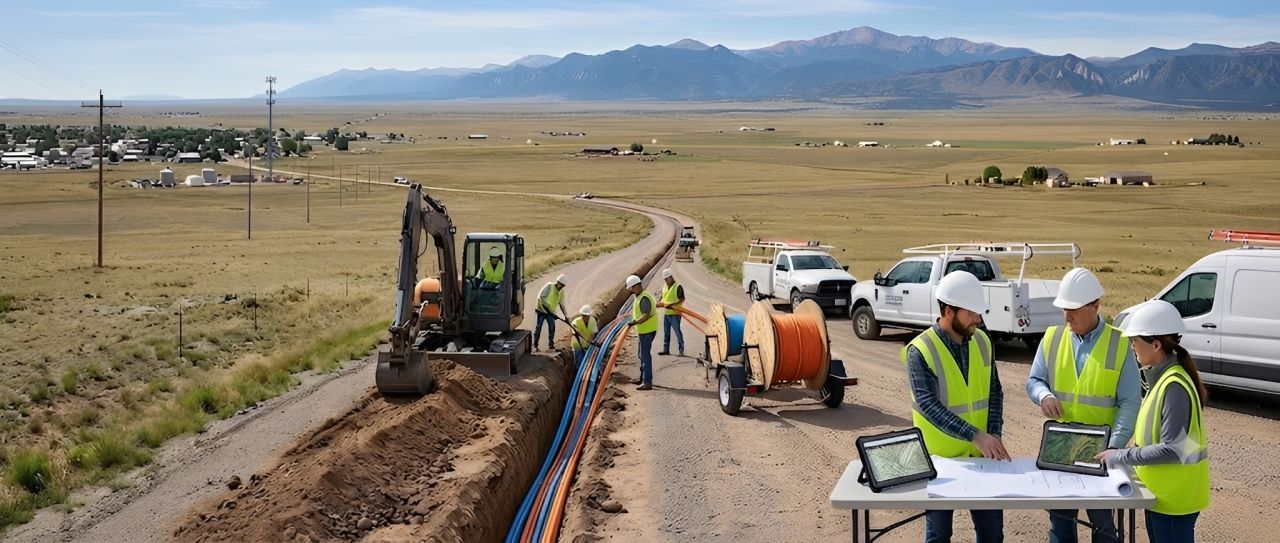
Connecting a rural Colorado community to broadband is a meaningful, often life-changing project, and a demanding one. These builds tend to cover difficult terrain, involve grant funding and its compliance strings, carry real timelines and community expectations, and land on teams, local providers, co-ops, municipalities, that may not have deep network-construction experience or spare capacity. That combination is exactly where outside help earns its place, and where going it alone gets risky.
The questions worth answering up front are when to bring in a consultant, and what they'd actually own on the project. Understanding both helps you decide whether outside help fits your build and, if so, how to use it well. Rural broadband projects have a lot riding on them, community connectivity, grant funding, real money, and a consultant's role is to bring the experience that keeps all of that on track. Here's when to bring one in for a rural Colorado community build, and what they take ownership of.
When to Bring In a Consultant
The case for outside help on a rural Colorado broadband build is strong whenever the project's stakes are high and the internal experience or capacity is limited, which is common for these projects.
When it's large or a first-of-its-kind effort
Many rural community builds are the biggest, or first, network project the responsible organization has taken on. That inexperience-at-scale is precisely where costly mistakes happen, and where an experienced consultant's knowledge is most valuable.
When it's grant-funded
Rural broadband is frequently grant-funded, and grants bring compliance, documentation, and requirements that carry serious consequences if mishandled (up to jeopardizing the funding). A consultant experienced with grant-funded builds is especially valuable here.
When the timeline is real
These projects often have deadlines, funding windows, service commitments, and keeping a complex build on schedule is hard. Experienced project management protects the timeline.
When the terrain and permitting are tough
Rural Colorado means challenging terrain and varied jurisdictions and permitting, exactly the conditions where local, experienced help prevents delays and surprises.
When the team is stretched or inexperienced
If the organization running the build lacks network-construction experience or the bandwidth to manage it well, a consultant fills that gap so the project is actually managed properly.
Most rural Colorado community builds check several of these boxes, which is why outside help is so often warranted. The underlying logic is the same as any high-stakes build: when the downside of getting it wrong is large and the internal margin for error is thin, experienced help de-risks the project. For a community's broadband future and its grant funding, that's usually a risk worth managing.
What a Consultant Owns: Planning and Feasibility
One of the first and most valuable things a consultant can own is the upfront planning and feasibility work, getting the project set up correctly before major commitments.
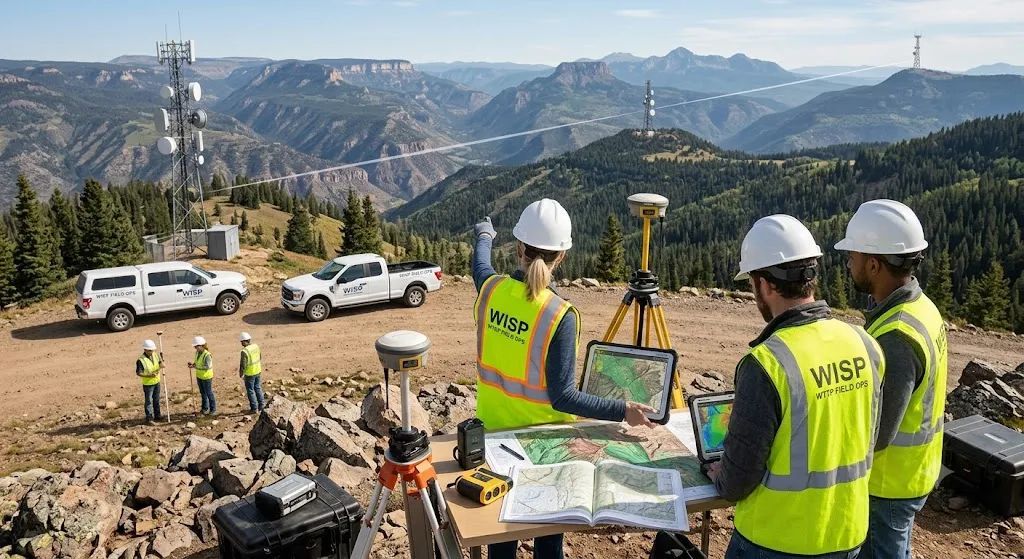
A consultant can own the planning that determines whether and how the build should proceed: assessing feasibility (can this be built to serve the community, given terrain, sites, and conditions?), helping shape the design and approach, and producing a realistic plan and budget grounded in the actual project. This upfront work is where a build is set up to succeed or fail, and where experience most prevents expensive missteps. Owning it means the consultant ensures the project starts on a sound, validated footing.
For a rural community build, this planning-and-feasibility ownership is often the highest-value role a consultant plays, because it shapes everything downstream. Getting the plan, budget, and feasibility right at the start is what a good consultant brings, and it's a natural thing for them to own given that it's exactly where their experience pays off most.
What a Consultant Owns: Construction Management and Oversight
During the build itself, the consultant typically owns the construction management, the active oversight and coordination that keep the project on track day to day.
This is the core of what a construction-management consultant does: overseeing the construction, coordinating the crews, vendors, and phases, tracking progress, catching and resolving problems early, managing inspections, and keeping the build moving on schedule and to spec. On a project where the responsible organization lacks the capacity or experience to do this well, the consultant owns it, providing the dedicated, experienced management the build needs. This is where the day-to-day work of keeping a build on budget and on time actually happens.
Owning construction management means the consultant is the one making sure the build is executed properly, that problems are caught while small, coordination holds, and the project progresses as planned. For a rural community build with a lot riding on it, having an experienced hand own this oversight is a major part of the de-risking. It's the difference between a build that's actively managed and one that's left to drift.
Tip: When engaging a consultant, get explicit about what they'll own versus what stays with your organization, planning, construction management, coordination, compliance, budget/schedule control, communication with stakeholders, and so on. Rural community builds often involve multiple parties (the provider, the community, funders), so clarity on who owns what prevents gaps and confusion. A clear division of ownership up front, matched to where your team needs the most help, is what makes the engagement work smoothly and ensures nothing critical falls through the cracks.
What a Consultant Owns: Budget, Schedule, and Compliance
Tying the project's success together, a consultant often owns the control functions, budget, schedule, and (critically for rural builds) grant compliance, that determine whether the project delivers as promised.
Budget and schedule control. The consultant can own holding the project to its budget and timeline, managing change, controlling costs, tracking the schedule, and heading off the overruns and delays that plague builds. This financial and schedule discipline is central to delivering the project as committed.
Grant compliance. For the many rural builds that are grant-funded, a consultant experienced in grant support can own keeping the project compliant, meeting requirements, maintaining documentation, hitting milestones, and reporting, so the funding is protected. Given the stakes (a clawback or lost funding would be devastating to a community project), this is one of the most valuable things a consultant owns on a grant-funded rural build.
Being the experienced hand. Above all, the consultant owns bringing the experience the project needs, anticipating challenges, navigating terrain and permitting, solving problems, and keeping the whole build on track, which is the through-line of everything they own.
So across planning, construction management, and these control functions, a consultant owns the pieces that most require experience and most determine the build's success. What exactly they own is defined by the engagement and your team's needs, but the pattern is clear: they take ownership of the high-stakes, experience-dependent parts, de-risking a rural Colorado community build so it delivers the connectivity, and protects the funding, it's meant to.
Warning: For a rural Colorado community broadband build, the high-stakes pitfalls, mismanaged grant compliance risking the funding, costly delays from terrain or permitting, budget overruns, and mistakes from inexperience, are exactly the ones a community and its providers can least afford, since the project's failure affects the whole community and the grant dollars behind it. Trying to run such a build without the needed experience or capacity is the real risk. Be clear-eyed about whether your team can own the high-stakes parts alone; where it can't, bringing in a consultant to own them is what protects the project.
Frequently Asked Questions
When should we bring a consultant into a rural broadband build?
When the stakes are high and internal experience or capacity is limited, which fits most rural community builds: when the project is large or a first-of-its-kind effort, grant-funded (with compliance strings), on a real timeline, facing tough terrain and permitting, or run by a stretched or inexperienced team. In those cases, an experienced consultant de-risks the project. Most rural Colorado builds check several of these boxes, so outside help is often warranted.
What does a broadband consultant actually own on the project?
It varies by engagement, but typically the high-stakes, experience-dependent pieces: upfront planning and feasibility, construction management and oversight, coordination of crews and phases, budget and schedule control, and grant compliance for funded projects, plus being the experienced hand that anticipates challenges and keeps the build on track. You and the consultant define exactly what they own versus what stays with your team, based on where you most need help.
Why is a consultant especially valuable on grant-funded rural builds?
Because grant-funded projects carry compliance obligations, documentation, milestones, requirements, reporting, and mishandling them can jeopardize the funding (even a clawback), which would be devastating to a community project. A consultant experienced in grant support can own keeping the project compliant and properly documented, protecting the award. Given how much rural broadband relies on grants, that compliance ownership is one of the most valuable roles a consultant plays.
Our organization hasn't built a network before, is that a problem?
It's a common situation for rural community builds, and exactly why consultants are often brought in. A first or unfamiliar-scale network build is where costly, hard-to-undo mistakes happen. A consultant brings the experience your organization doesn't yet have, owning the planning, construction management, and control functions that most require it. That fills the experience gap so the project is managed properly rather than learned on the fly at the community's expense.
What's the highest-value thing a consultant does early on?
Often the upfront planning and feasibility work, assessing whether and how the build should proceed given terrain, sites, and conditions, shaping the design and approach, and producing a realistic plan and budget. This is where a build is set up to succeed or fail, so getting it right (with experience) prevents expensive downstream missteps. Owning sound planning at the start shapes everything that follows, making it a natural, high-value consultant role.
How do we divide responsibilities with a consultant?
Get explicit up front about what the consultant owns (e.g., planning, construction management, coordination, budget/schedule control, compliance) versus what stays with your organization. Rural builds often involve multiple parties, provider, community, funders, so clarity prevents gaps and confusion. Match the division to where your team most needs help, and make sure nothing critical is left unassigned. A clear ownership split is what makes the engagement run smoothly.
Isn't bringing in a consultant just added cost on a tight budget?
On a high-stakes rural build, experienced help typically prevents costs far larger than its own, delays, rework, overruns, and especially jeopardized grant funding. For a project the community and funders are counting on, the risk of getting it wrong is exactly what a consultant is there to manage. The question isn't just the cost of help, but the cost of the mistakes it prevents on a build the community can't afford to have fail.
Give the Community Build Its Best Chance
Connecting a rural Colorado community to broadband is a high-stakes build, tough terrain, grant funding, real timelines, and often a team without deep network-construction experience. That's precisely when a consultant earns their place, and what they own reflects it: the upfront planning and feasibility, the construction management and oversight, and the budget, schedule, and grant-compliance control that determine whether the project delivers. In short, a consultant owns the experience-dependent, high-stakes pieces, de-risking the build so it achieves the connectivity it's meant to and protects the funding behind it. For a community counting on the outcome, bringing in that experience where your team's margin is thin is what gives the project its best chance.
De-risk your rural Colorado community broadband build with experienced help — Rural broadband projects often involve challenging terrain, grant compliance, demanding timelines, and teams that may be new to network construction. Experienced oversight helps reduce risk by improving planning, construction management, and regulatory compliance from the start. With 20
years of experience, TrueLight Construction LLC
provides professional
broadband construction consulting services
in Colorado Springs, Colorado, helping communities and service providers deliver successful broadband projects while protecting schedules, budgets, and funding. Reach out today to discuss your community's build and where experienced guidance can make the greatest impact.