
8 Things to Verify Before You Sign With a Fiber Construction Management Partner
Quick Answer: Before signing with a fiber construction management partner, verify eight things: exactly what "construction management" covers in the contract, a track record with builds comparable to yours, real experience in your specific terrain and permitting environment, licensing, bonding, and insurance matched to every state you're building in, how subcontractors and field crews are vetted and supervised, a defined process for handling changed conditions in the field, the testing standards and as-built documentation you'll receive at close-out, and a genuine safety culture rather than a policy binder. A contract can look complete on paper and still leave gaps in any of these areas, and those gaps are what turn into missed milestones once crews are mobilized.
A fiber construction management contract usually runs a dozen pages or more, exhibits, scope narratives, a schedule of values, and it can read as thorough without actually answering the questions that determine whether your build goes smoothly. The paperwork tells you what's supposed to happen. It doesn't always tell you whether the partner in front of you can actually make it happen on the ground you're building on, with the crews they'll actually field, under the conditions your project will run into.
That gap between a well-written contract and a well-run build is where a lot of network projects lose time and money, not because anyone acted in bad faith, but because the operator didn't verify the things that predict execution before signing. The eight items below are what to confirm, in plain terms, before a fiber construction management agreement goes final.
1. What "Construction Management" Actually Covers
The phrase "construction management" means different things from one contractor to the next, and the difference matters more than almost anything else in the contract.
Some construction management partners own the build end to end, engineering, permitting, placement, splicing, testing, and restoration, all under one accountable team. Others act purely as an oversight layer, coordinating subcontractors they don't directly employ or supervise in the field, with the actual construction risk sitting elsewhere. Neither model is automatically wrong, but you need to know which one you're signing, because it changes who answers for a missed milestone or a field problem.
Read the scope section line by line and ask directly: which of these phases does your team perform with your own crews, and which are subcontracted or coordinated on our behalf? Get the answer in writing, not as a verbal assurance, because it's the single clearest predictor of how much direct control the partner actually has over your outcome.
2. A Track Record With Builds Comparable to Yours
General construction experience and fiber-build experience are not the same thing, and a construction management partner's résumé needs to hold up specifically on the second one.
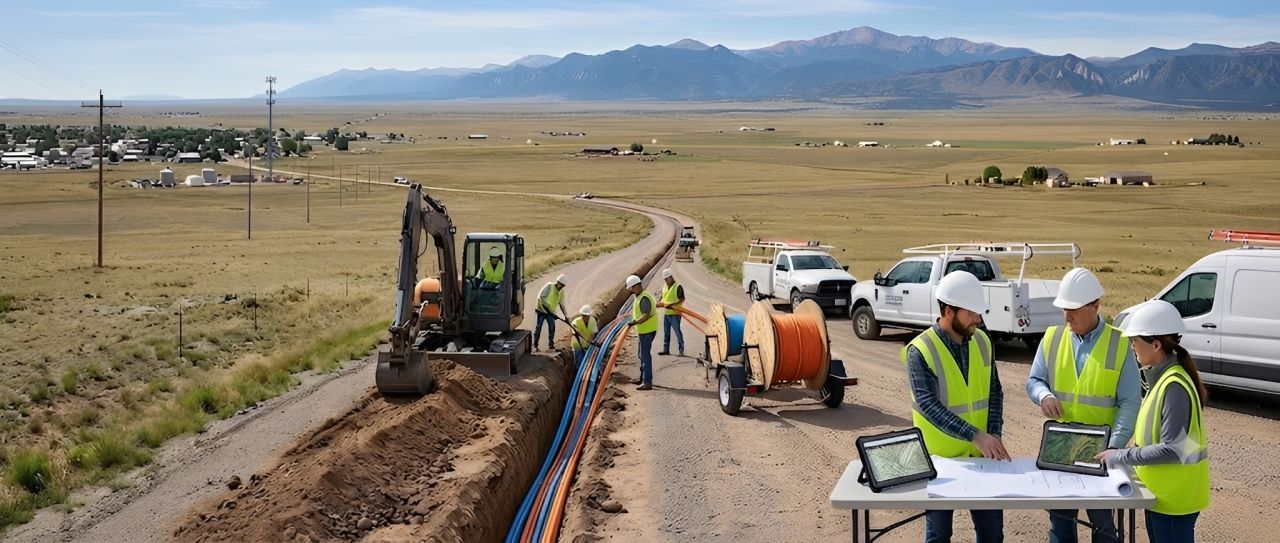
Ask for a list of projects comparable to yours in type, scale, and terrain, not just a portfolio of logos. A partner who has managed FTTH builds through mountain terrain and multi-jurisdiction permitting brings a different, more relevant kind of judgment than one whose comparable experience is mostly flat suburban trenching. Request references you can actually call, and ask those references pointed questions: did the schedule hold, how were changed conditions handled, what would they do differently next time.
A track record on paper is a starting point. A track record you've verified by talking to people who lived through the build is what actually tells you whether the partner delivers.
3. Real Experience in Your Terrain and Permitting Environment
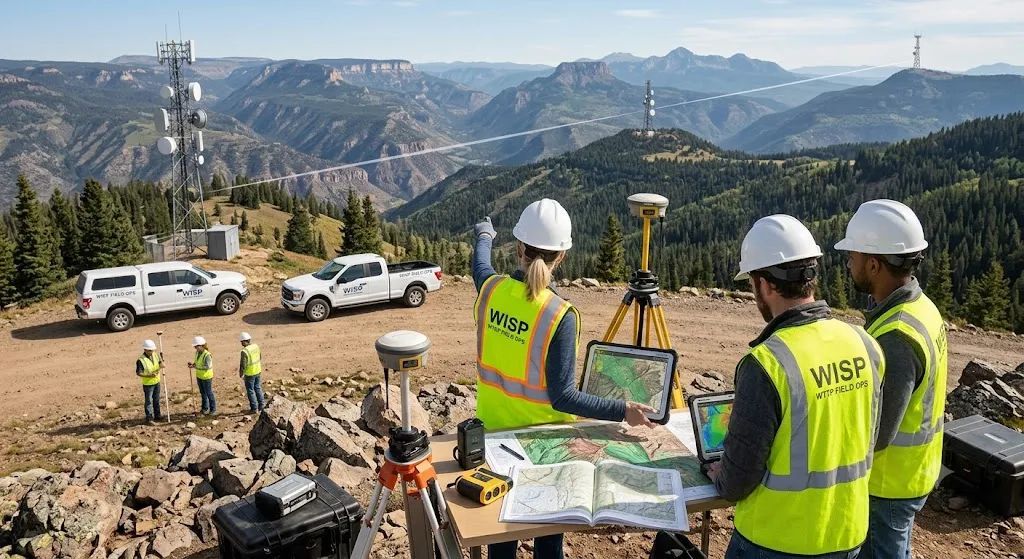
Across the Mountain West and Plains, terrain and permitting vary enormously from one stretch of route to the next, and a partner's familiarity with your specific conditions is not something you should assume.
Rocky ground that turns a planned bore into a redesign, frozen-ground weather windows that compress a construction season, and jurisdictions that each run permitting on their own timeline are the kind of local realities that a partner either has already worked through or hasn't. Ask how they've handled builds with similar ground conditions, how they plan around a state's or county's specific permitting process, and how they sequence work when weather or terrain forces a change. A partner who answers with specifics from past projects has actually done this. A partner who answers in generalities probably hasn't, at least not here.
Tip: Ask a prospective partner to walk through how they'd sequence your specific route, segment by segment, rather than describing their process in the abstract. A partner with real regional experience will talk about your terrain, your jurisdictions, and your likely weather windows without prompting. One who stays generic is telling you something too.
4. Licensing, Bonding, and Insurance Matched to Every State You're Building In
Licensing, bonding, and insurance requirements differ by state, and a partner operating across a multi-state footprint needs to be current in every jurisdiction the build actually touches, not just their home state.
Verify current licensure in each state on your route, confirm bonding capacity is adequate for the size of your project (not just present in some minimum amount), and confirm the insurance program actually covers the work being performed, general liability, and coverage appropriate to underground and aerial utility construction specifically. A gap here isn't a paperwork technicality. It's exposure that lands on your project if something goes wrong mid-build and the coverage doesn't reach.
Ask for certificates directly rather than taking a general assurance that "we're covered everywhere we work." A partner with a clean, current multi-state program will produce that documentation without friction.
5. How Subcontractors and Field Crews Are Vetted and Supervised
If any part of the work will run through subcontractors, the contract needs to answer who is actually supervising them in the field, not just who is listed as responsible on paper.
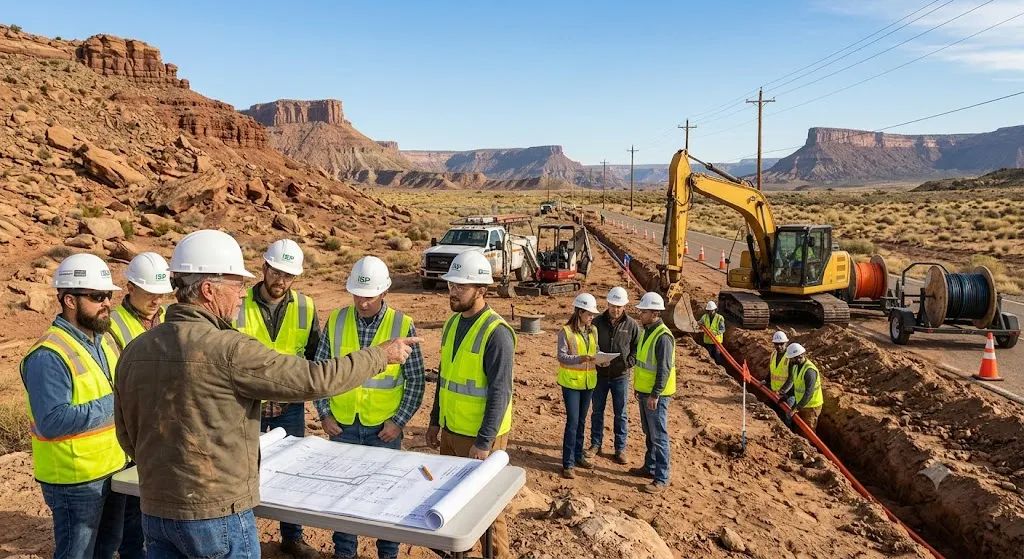
Ask how the partner selects the crews and subcontractors who'll work your build, what qualification and safety standards those subs are held to, and who from the construction management team is physically on site providing oversight day to day. A partner who can name their vetting criteria, their on-site supervision ratio, and how they handle a subcontractor who underperforms has a real process. A partner who describes subcontractor management only in terms of contract language, with no on-site presence to back it up, is passing the execution risk down a level without necessarily passing along the accountability.
Direct crews under the partner's own supervision and well-managed subcontractor crews can both deliver a good build. Unsupervised subcontractor crews, with no one from the construction management team routinely on site, are where quality and schedule problems tend to surface first.
6. A Defined Process for Handling Changed Field Conditions
Every fiber build runs into something the design didn't anticipate, rock a foot shallower than the geotechnical assumption, a utility conflict the locate didn't fully capture, a permitting condition that shows up after the fact. What separates a well-run build from a stalled one is whether the partner has an actual process for handling that moment.
Ask how changed conditions get identified, documented, and escalated, how quickly you're notified, and how a schedule or scope adjustment gets decided and approved. A partner with a defined change process will describe specific steps: who flags the issue in the field, who evaluates the options, how the decision gets communicated back to your team, and how the schedule absorbs it. A partner without one will describe changed conditions as something that "gets handled," without detail on how or by whom.
This is also where communication cadence matters. Confirm how often you'll get status updates, in what format, and who your direct point of contact is when something needs a fast decision. A construction management partner who can't answer that clearly before the contract is signed is unlikely to answer it better once the build is underway.
7. Testing Standards and As-Built Documentation at Close-Out
A fiber build isn't finished when the cable is in the ground or on the pole. It's finished when the route is tested to a defined standard and documented in a way your operations team can actually use.
Confirm what testing the partner performs before calling a segment complete, OTDR testing, power-meter verification, and what pass/fail thresholds they apply. Confirm what documentation you receive at close-out: as-built drawings that reflect what was actually built rather than only the original design, splice records, test results, and a clear punch list of anything outstanding. A partner who can describe their testing and documentation standard in specific, measurable terms is one whose "complete" will match your operations team's definition of complete. A vague answer here is a signal that close-out could turn into a back-and-forth over what was actually delivered.
Warning: Be cautious of any construction management partner who treats testing and as-built documentation as an afterthought, something handled loosely at the end rather than built into the process from the start. A route that isn't properly tested and documented can look complete in the field while creating operational problems, and disputes over scope, months later when your team tries to turn it up or troubleshoot it.
8. A Genuine Safety Culture, Not Just a Policy Binder
Every construction management partner will hand you a safety policy on request. What actually protects your project, your schedule, and the people working it is whether that policy reflects how crews behave in the field.
Ask how safety is trained, reinforced, and actually enforced on site, not just documented in a manual. Ask what their incident history looks like and how they respond when something does go wrong. A partner with a genuine safety culture treats it as part of daily field operations, not a binder pulled out for the contract review. That distinction matters for your build directly: a crew operating without real safety discipline is also a crew more likely to generate the delays, rework, and disputes that come with an incident.
Frequently Asked Questions
What's the single most important thing to verify before signing?
Exactly what "construction management" covers, meaning which phases the partner directly performs versus subcontracts. That answer determines who is accountable for execution and shapes how every other item on this list gets evaluated. (30 words)
How do I verify a partner's experience without just trusting their pitch?
Ask for comparable projects by type, scale, and terrain, then request references you can call directly about schedule performance and changed conditions. A verified track record beats a portfolio summary.
Why does regional terrain and permitting experience matter so much?
Terrain and permitting realities vary enormously by area, and a partner's judgment on sequencing and jurisdictional requirements is only as good as their actual experience in conditions like yours specifically.
What should I ask about subcontractor oversight specifically?
Ask how subcontractors are qualified, what standards they're held to, and who's physically on site supervising. Specific answers signal a real process; vague contract-language answers suggest thinner field supervision.
What documentation should I expect at project close-out?
As-built drawings reflecting actual construction, splice and test records against defined thresholds, and a clear punch list. Vague answers here signal close-out may become a dispute over what was delivered.
Is it reasonable to ask for references and certificates before signing?
Yes. A partner confident in their track record and current licensing, bonding, and insurance will provide both without friction. Hesitation in place of documentation is itself useful information.
Put the Contract to the Test Before You Sign
A fiber construction management contract can look thorough and still leave the questions that matter most unanswered: what's actually being managed directly, whether the experience is truly comparable to your build, whether licensing and insurance hold up across every state on your route, how field crews are actually supervised, and whether testing and documentation will meet your operations team's standard at close-out. Verifying these eight things before you sign doesn't slow the process down so much as it protects the schedule and budget you're about to commit to.
With 20
years managing fiber and utility construction across Colorado Springs, Colorado and the broader Mountain West and Plains, TrueLight Construction LLC
has built a track record across the terrain, permitting environments, and weather windows this region actually throws at a project. A partner with real answers to all eight of these questions will welcome them. Reach out to talk through your project's scope and what a construction management partnership with us would actually look like on the ground.